So, I have a new article out in Public Administration Review
The article is, you guessed it, about frontline work and deservingness perceptions and it’s done by me and two incredibly skilled co-authors: Mogens Jin Pedersen (from Uni of Copenhagen) and Jurgen Willems (from Vienna University of Economics and Business).
The basic idea of the paper was to say: OK, so by now we know that frontline workers like teachers and caseworkers rely on judgments about citizens’ deservingness. If citizens seem deserving because they are needy or hard-working, frontline workers will prioritize them, granting them more time and other kinds of resources.
In the literature on deservingness, this behavior has been problematized because it means that some citizens get access to things that other citizens do not. And although the deservingness criteria used by frontline workers may seem fair and perfectly natural as rules of thumb for making day-to-day decisions, these criteria are not explicated in any legislation. Thus, the argument goes, they might not be legitimate ways of delivering public services.
This critique notwithstanding, we thought it would be interesting to see what citizens had to say. Do they align with the criteria used by frontline workers? Or do they view them as illegitimate? And more broadly, what criteria would citizens use if they were put in the shoes of frontline workers?
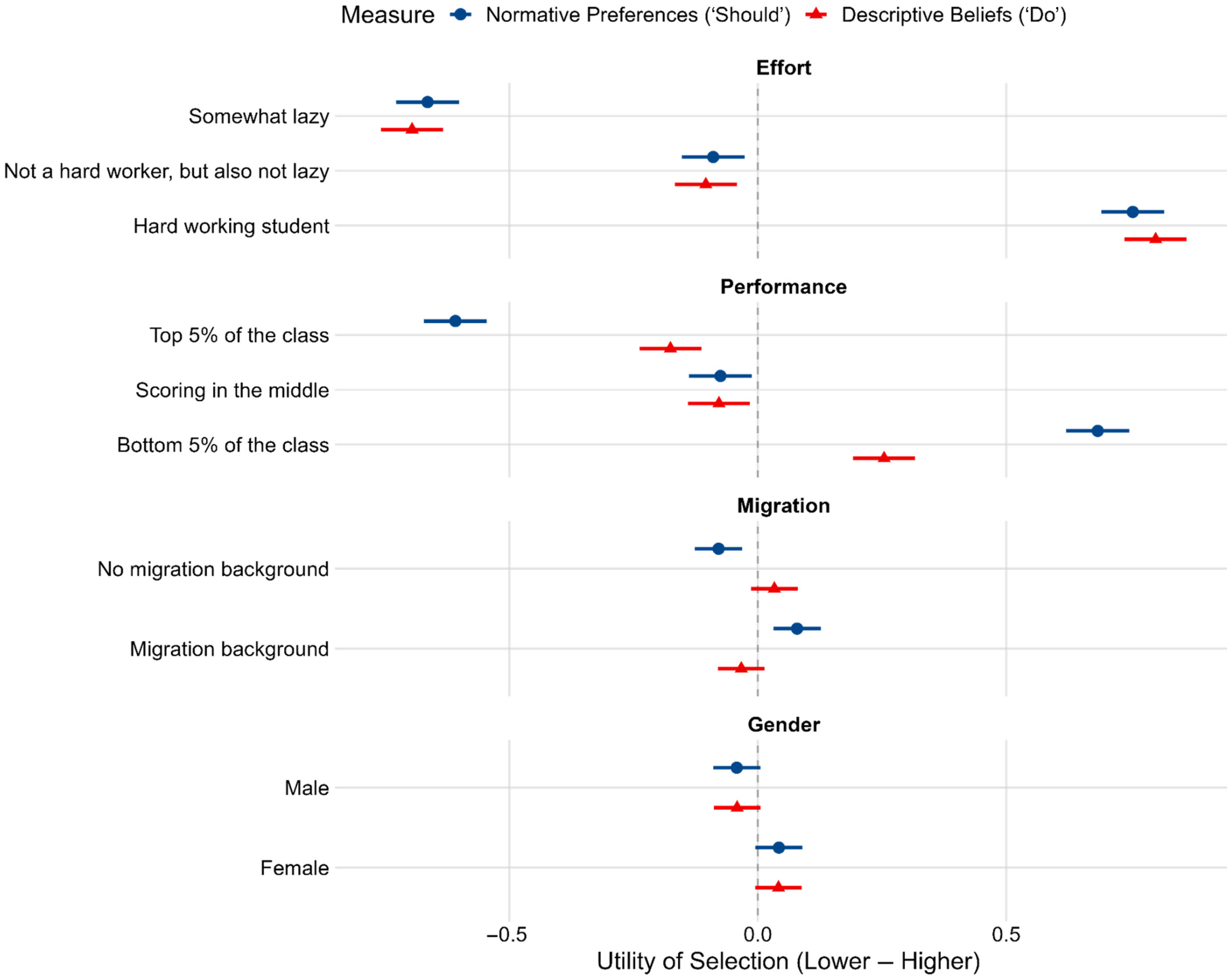
To study this, we ran a large-scale survey experiment in three countries: Denmark, the Netherlands, and New Zealand. Using a conjoint design, we had citizens prioritize between the same types of students used in an often-cited study by Sebastian Jilke and Lars Tummers. This way, we could compare whether citizens in these countries saw eye-to-eye with frontline workers.
The conclusion? They did. Across the three countries, our findings revealed a remarkable consensus between frontline workers and citizens in terms of which students deserved to be prioritized. This adds some nuance to the debate above, because if frontline workers prioritize in the same way that citizens would, is this behavior then problematic? Or is the differential treatment implied by prioritizing some clients over others just a sign that frontline workers use the discretion they have been granted in a way that is perfectly legitimate?
For a lengthier discussion of that question, go read the paper!
Oh, and here is a figure from the paper: